

Project Description: VR NeuroLink AI
Problem
More than 1 billion people worldwide live with central nervous system and balance disorders. Yet fewer than 10% of patients receive rehabilitation, primarily due to a shortage of specialists, the high cost of equipment, and limited access to instrumental diagnostics.
Despite the existence of validated methods for objective assessment of balance and coordination, including stabilometric platforms, objective diagnostics remain the exception rather than the norm in everyday clinical practice. High costs, infrastructure requirements, and the need for specialized staff make these solutions inaccessible to most physicians and rehabilitation centers.
As a result, the majority of rehabilitation programs are conducted without objective measurements, relying instead on subjective scales and clinical judgment. This makes patient progress difficult to measure, results poorly comparable, and neurorehabilitation practically impossible to scale at the healthcare system level.
Without accessible objective diagnostics, neurorehabilitation cannot be standardized, scaled, or integrated into sustainable reimbursement models.
Solution
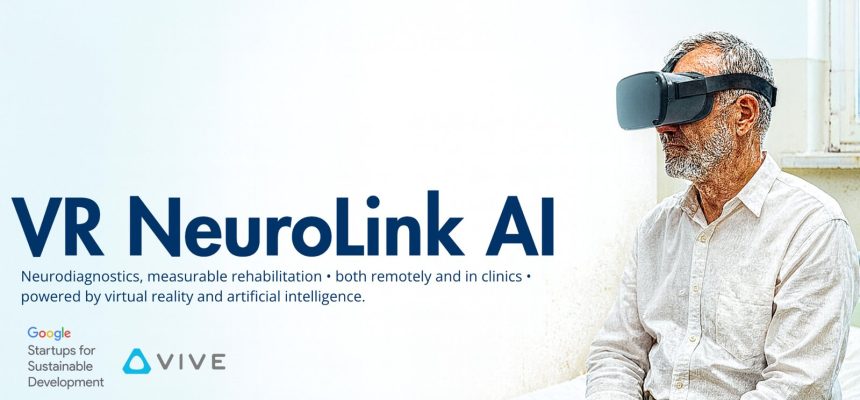
VR NeuroLink AI is a VR platform that transfers the principles of objective stabilometric assessment into a digital VR environment and makes them accessible in everyday clinical practice, combining diagnostics and rehabilitation into a single measurable clinical cycle.
The platform is designed for objective diagnostics and measurable rehabilitation of CNS and balance disorders and is applicable to 25 ICD-10 conditions, including stroke, Parkinson’s disease, ataxia, traumatic brain injury, and cerebral palsy.
VR is widely used in neurorehabilitation; however, most existing VR solutions were not designed as diagnostic tools. The data they collect are generally not clinically comparable, reproducible, or used as a basis for medical decision-making.
VR NeuroLink AI closes this gap by:
- providing objective measurements comparable to instrumental diagnostics;
- integrating these measurements not as a separate step, but directly into the rehabilitation process.
The solution combines clinical VR scenarios, algorithms for objective assessment of balance and coordination, and AI modules that automate program selection, data collection, and clinical reporting.
This is a clinical tool, not a VR engagement or wellness product.
Why Now
The medical VR market is growing at a CAGR of over 30%, yet this growth remains largely therapy-driven and does not address the need for objective diagnostics. At the same time, healthcare systems face workforce shortages, a growing number of patients with neurological disorders, and increasing pressure to demonstrate treatment effectiveness through data rather than subjective assessment.
Healthcare systems are ready for VR. They are no longer ready for subjectivity.
Scientific and Clinical Foundation
The methodology behind VR NeuroLink AI is based on clinical studies conducted between 2020 and 2023 and is supported by publications and presentations at international scientific conferences.
The studies demonstrated:
- statistically significant improvements in balance and coordination compared to conventional therapy;
- faster functional recovery after stroke and traumatic brain injury;
- reduced dropout rates during rehabilitation.
The method has been validated on more than 1,000 patients and implemented in six clinical centers (outside the EU). Approved clinical protocols and a patent in the EAEU are in place.
Current Status and Development
At present, VR NeuroLink AI is a clinically validated MVP.
In 2026, pilot projects in 2–3 European Union clinics are planned, involving approximately 100 patients, aimed at further clinical validation, adaptation to EU regulatory requirements, and preparation for CE MDR certification.
The pilots are being developed in collaboration with clinical and academic partners, including Michels Kliniken Group, Medical Valley Alliance, Medical University of Łódź, and Bartelli Medical Group, providing access to clinical infrastructure and expertise.
Social and Systemic Impact
VR NeuroLink AI addresses a core barrier in modern neurorehabilitation — the lack of accessible, objective diagnostics embedded into routine clinical practice.
The project:
- shifts CNS and balance rehabilitation from subjective assessment to data-driven decision-making;
- makes outcomes measurable and comparable;
- lays the foundation for standardization, scalability, and sustainable reimbursement models in neurorehabilitation.
Final Statement
VR NeuroLink AI delivers what healthcare systems have lacked for decades: transforming objective neurodiagnostics from rare and expensive equipment into a daily clinical standard for rehabilitation.