
Updated August 2025
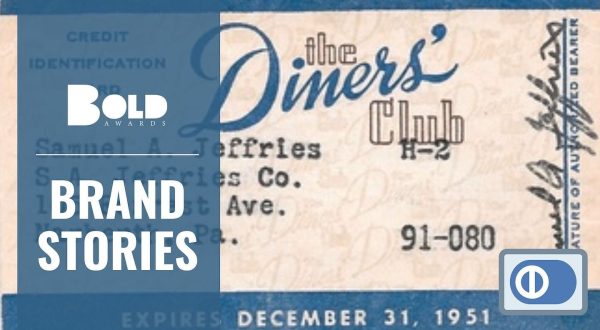
Did you know that the Diners Club card was the first credit card? We are familiar with them today, but before 1950 they had not existed. Today we are used to reading and hearing about startup founders with ideas for new fintech that does this or that, usually providing a financial service that already exists, but doing it faster, cheaper, more easily. There’s an endless stream of fintech startups, hoping to carve out a corner of some aspect of financial services. However, the founders of Diners Club were true pioneers. They created an entire credit card ecosystem before any banks ever thought of it; presented a brand new concept to merchants with non-essential, and sometimes higher price items to sell; and convinced well-off consumers to adopt a totally new way of paying. And grew business through telling a simple story.
The start of Diners Club was supposedly based on a man taking a client to dinner, and through forgetting his wallet he was unable to pay. While company stories are meant to be authentic, it turns out this one owes more to poetic license, and was more of a PR Man’s masterstroke. Diners Club’s marketing efforts continued to use them to build a global brand and market leader status. This shows that storytelling, used by the major brands such as Diners Club as a marketing tool, is not new. Today’s digital channels just provide many more ways to circulate the stories.
The Diners Club myth
The man in question was a co-founder of Diner’s Club, Francis McNamara. The story is that one evening in 1949 he had forgotten his wallet and his wife had to drive it to the restaurant for him to pay the bill. He then supposedly came up with the idea of a charge card for use in restaurants to avoid having to pay by cash or check each time, and settle up a monthly bill. But let’s face it, if such a card had already existed, wouldn’t it have been in the same wallet as his cash? He would still have been unable to pay, but people remember a story like this more than the detail of relentless work and iterations to create a totally new financial service.
Narrative stories as part of brand marketing are a powerful way to breathe life into a brand and enhance its identity. Beyond facts and figures of competitive performance and product advantages, a good story can engage a target audience’s heart as well as its head, and thus connect at an emotional level.
The real origin of Diners Club
The “alternative” or “real history” of the first credit card was written about in 2020 by a friend of the PR man who created the myth, Matty Simmons, after he had passed away. Matty knew the real story, as he had handled the marketing to get the innovative financial startup off the ground: here it is.
Frank McNamara had lunch at the same restaurant every day he was at work in New York City. As a reliable, regular customer he was able to set up a personal tab to pay a monthly bill. But he would not be able to reach a similar arrangement with other restaurants, and other (unknown) people could not put their bills on a tab in the same restaurant that he went to all the time.
Store cards had existed for 20 years. However, each store issued its own card. The cards were made of metal with embossed details which were impressed on triplicate store bills, and payment was settled up on a monthly basis. Restaurant users would not want to have to carry numerous metal tags around for each place they might want to eat in, so store cards were a start point though not the final solution of what was to become the first credit card, the Diners Club card.
It was almost inevitable that Frank McNamara’s regular restaurant, The Major’s Cabin Grill at 33 West 33rd Street, would be the first one to take the first payment by a general-purpose charge card. That was in February 1950, and the charge card was made of cardboard.
The early launch and roll out of the first credit card
The Diners Club company was formed and launched on February 8 1950, with backing of $1.5 million. At today’s value that amount corresponds to around $18 million.
What began as a payment method in New York restaurants quickly grew to include hotels, car hire and flower shops. A copycat me-too operation in California was quickly absorbed, and by the close of 1950 there were 20,000 card holders.
Merchants paid a 7% fee to accept the card. In the beginning, cardholders could sign up for a card at no charge, but business was slow in the early days. So Diners Club began to charge a $3 annual fee, and soon it was $5 a year. Diners Club also created a newsletter to send out with their monthly statements to cardholders, and sold advertising space in it to create a third income stream. Perhaps having to pay for a Diners Club card added to its early kudos as a badge of credit worthiness.
By the end of 1952 the number of cardholders had more than doubled to 42,000. In that year, McNamara sold his stake in the business to his partners for $200,000. That’s around $2.1 million today. A year later in 1953 the card began to spread to other countries and be used internationally.
Making Diners Club happen
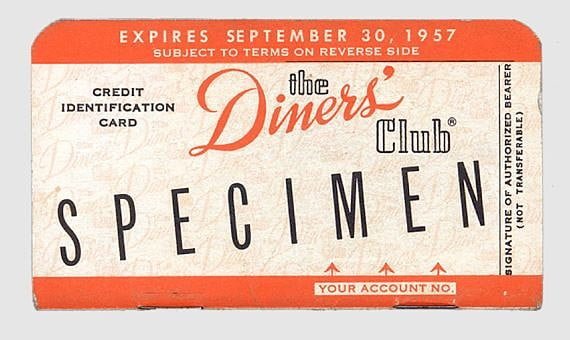
At the time, the first credit card must have been regarded by the banking establishment as a real disruptor. Cardholders did not need to carry as much cash, and they could settle numerous bills with one monthly statement. I guess today’s comparisons in terms of something new and disruptive could be the PayPal payment system, or the fintech online banking apps provided by the likes of Revolut, Monzo and Starling Bank, built on the back of hand-held digital connectivity, online retailing, and mass data collection and management.
Today’s founders of fintech startups will particularly appreciate what must have taken place to launch Diners Club as the first credit card. Nothing like it had previously existed, it was a true ground breaker, and they raised around $18 million in today’s money.
They needed to credit check card applicants and prepare monthly statements with all data stored on paper; Diners Club did not have a computer until 1968. They had to convince the merchants to start using a whole new payment method, which cost them 7% of their prices and changed their pattern of cash flow. Also, they created new types of cards (the plastic card was introduced in 1961) and a monthly billing/payment system.
The Diners Club storytelling continued
In 1962 a feature film was released called “The Man From The Diners Club.” In it, the population of a U.S. town was barred from using cash for a day. Everyone was issued with a Diners Club card, with Junior Cards for the children. Can you imagine a similar film today about everyone having to use cryptocurrency, or a central bank digital currency?
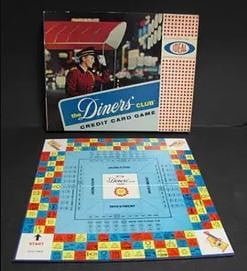 Around the same time, a Diners Club board game was released. Appearing somewhat similar to Monopoly (a game based on acquiring wealth through property ownership), the game contained a foldable board, paper money and player markers to move around the board, plus charts for various repayment schedules. Players moved their markers in turn, investing money and making returns. The winner was the first player to make $5,000 of investments, own a house and car, and to have paid at least $5,000 on their Diners Club card.
The credit card market was tougher after the introduction of Visa and Mastercard in the late 1960s. Diners Club was acquired by Citibank in 1981, and it is still with us; based on a tale of a man who was supposed to have forgotten to take his wallet to a restaurant.
Matty Simmons, the PR man, many years later said he had to glamorize the launch of the first credit card. The tale of the missing wallet could be told easily, it was an effective and memorable “elevator pitch” that once heard was easy to pass on to other people. The truth is actually a much bigger story.
Recent developments
Diners Club is following trends in fintech advancements and working with new fintech service providers, including:
In January 2025, ISX Financial launched its flykk® Diners Club International Debit Card offering global acceptance, travel perks (e.g., lounge access, insurance), and secure payments. This debit card targets consumers and businesses seeking premium payment options. Benefits like airport lounge access and travel insurance appeal to frequent travellers and align with fintech trends.
Nium, a global B2B payments platform, launched a Diners Club International Card for its travel customers on January 9, 2025. It targets travel intermediaries, and this virtual card enhances B2B travel payments, offering flexibility, cost optimisation, and global acceptance at over 55 million merchant locations and 1.2 million ATMs. It complements Nium’s existing Visa, Mastercard, and UATP cards, making it one of the first issuers to support all four major payment schemes. For Diners club, such partnerships modernise its image as a leader in B2B fintech s B2B travel payments. The partnership strengthens Diners Club’s reputation as a premium payment network.
In March 2025, Pax2pay, a travel payment provider, also partnered with Diners Club International to enhance B2B travel payments. The collaboration optimises costs, improves acceptance rates, and expands solutions for business travel, leveraging Diners Club’s global network. Diners Club provides 190+ country acceptance, and supports seamless cross-border transactions.
Diners Club’s 75th anniversary branding campaign (February 2025)
In February 2025, Diners Club International celebrated its 75th anniversary with a $750,000 donation to World Central Kitchen, linking transactions to meals for disaster-impacted communities (150,000 meals served). Employees marked the milestone in New York’s Times Square, emphasising the brand’s legacy and future vision.
The campaign reinforced Diners Club’s image as a premium, trusted brand, highlighting its historical role as the world’s first multipurpose charge card and its commitment to social impact. The Times Square event and Forbes’ BrandVoice feature position it as vibrant and forward-looking.
The campaign leveraged digital marketing (e.g., Forbes, social media) to amplify brand visibility, aligning with modern fintech branding strategies.
BOLD Awards 2026
Our annual awards highlight and celebrate innovations and breakthroughs achieved among a global community of digital industry leaders. The BOLD Awards VI gala dinner ceremony took place in March 2025, in Lisbon, Portugal. After networking opportunities at a drinks reception, category finalists, sponsors, and VIP guests were entertained by lively and thought-provoking speakers before enjoying a sumptuous meal. Prizes were awarded in 21 categories of digital industries and the technology that powers them. Full details of the winners are just a click away.
BOLD Awards VII is now open for entries, at an Earlybird processing fee of just €49. Entries can be revisited and upgraded at any time up to the final deadline in December 2025, even after the Earlybird period closes. Judging will begin with a round of public voting in January 2026, and continue with assessments by an international panel of judges, leading to a glittering award ceremony for all finalists on 27th March 2026 in Barcelona, Spain.
There are also opportunities to gain prominence and prestige as a category sponsor. Send an email to hello@bold-awards.com for more information about this.