
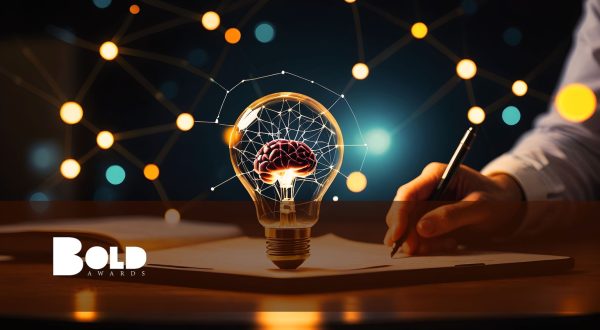
Building effective AI–human partnership collaborations involves focusing on augmentation, not replacement, maintaining human agency, and fostering a culture of continuous learning and trust. Organizations should equip their teams with AI literacy and provide training, while also prioritizing transparency and accountability in AI systems to ensure human oversight and control. Success is achieved by creating systems that learn and adapt over time, where the strengths of AI (speed, data processing) complement human skills (creativity, judgment, empathy).
The real-time background to this topic is that we’ve all seen and heard alarmist media headlines about how many people’s jobs will be lost to AI. AI is definitely reshaping work faster than universities, employers and governments can adapt. Business owners are wondering whether to invest in technology or people. Service companies are wondering to what degree their clients will use AI to take their role in-house, and cut them loose.
Here at BOLD Awards we prefer the idea of building effective AI-Human partnerships, operating in collaboration. In professional roles and a knowledge industry scenario, it will be people who use AI – not AI by itself – that will take the jobs of people who don’t.
AI’s early impact
Enterprise-wide productivity gains have yet to materialise in any broadly accepted empirical manner. AI’s pressure on traditional workplace structures and employment practices is nevertheless already apparent. A global study by McKinsey showed nearly 80% of the world’s largest companies using AI in at least one business function.
A new study by Microsoft confirms office jobs such as sales and communication roles are among those most at risk from AI, as the ever-developing software takes on more of the tasks usually carried out by workers in these fields. A UK study of online job vacancy advertising covered the period from the three months ending May 2022 to July 2025. The volume of advertising for jobs with a low exposure to AI dropped 21%. For roles with a high exposure to AI the drop was a much larger 38%.
The impact of AI, and its uses, was a recurring theme at the recent Sifted Summit 2025 in London, UK, which brought together over 3,000 attendees from European startups and a range of institutional, angel, and retail investors. Startups are very much looking at how to grow, and what balance of investment to make in technology or people. Investors are seeking guidelines to determine if businesses they might invest in are “getting it right.” A number of speakers and panellists provided fresh insights that are transferable and applicable to numerous business and industry sectors.
Fintech
Jasper Martens is CMO at PensionBee. As people change jobs in their career they can acquire a series of pensions with a number of employers. PensionBee helps consolidate them into one easy-to-manage online plan. Jasper Martens is responsible for the company’s marketing throughout the US and the UK. His teams use AI to complete standard tasks more efficiently, freeing up their time to dive deeper, be more specific, and uncover new business growth opportunities. Some of these standard tasks now take days instead of weeks, or hours instead of days, he said.
- AI enables PensionBee marketing teams to conduct more meaningful analysis of customer sub-group behaviour, and they are challenged to devise original strategies to increase turnover and profit.

Bloom Money provides financial services to immigrants settling in the UK. In its earliest days, CEO Nina Mohanty also took on the roles of CFO and CMO, drawing on her previous work experience at Klarna, Starling Bank and Mastercard, as well as her experience of being an immigrant herself. Nina admitted that her first attempts to use AI to create marketing collateral in an AI human partnership – such as press ads using Canva – now look horrendous. There were multiple fonts, confused messages and uncomplimentary imagery.
- Her lesson was that simply because AI can do something, it doesn’t mean it does it well. The quality of human input/collaboration remains crucial.
Deeptech
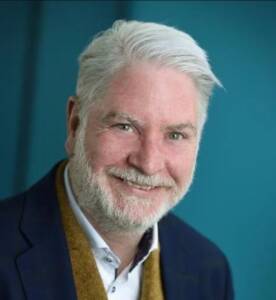
Patrick Pordage is CMO at Monumo, a deeptech company coupling AI and machine learning with traditional engineering expertise to redesign the electric motor. His teams use mainstream generative AI to do what he described as “the boring tasks,” though he makes sure they do not accept its output at face value. The social media content it writes can be inaccurate, and gen AI can make wrong decisions. “It is unable to say ‘I don’t know’ and will always give some form of an answer, right or wrong,” he cautioned.
Patrick cited the example of global consultancy Deloitte furnishing the Australian government with a report littered with AI errors. On top of hundreds of thousands of dollars they had to hand back, the episode has undoubtedly damaged Deloitte’s reputation. Gen AI also has a bias to some media outlets more than others. In his opinion, AI tools create enough work to fill the time they save.
- The CMO at Monumo believes generative AI definitely still requires human intervention and collaboration to ensure accuracy.
Wellness
Hannah Samano is founder and CEO of Unfabled. This is a consumer platform for women’s health and wellness. They also provide a range of supplements sold in the UK’s major pharmacies. Unfabled has achieved 12x growth in the past 24 months with just a 25% increase in staff. This was an amazing increase, largely driven by employing AI rather than many more people.
However, Hannah found that:
Faster than expected growth, driven by AI, accelerates the need for subsequent funding rounds in order to stay ahead of competitors and exploit opportunities.
Investors in AI-driven businesses, which could include retail investors through crowdfunding, should take note of this. Thay may find themselves being asked for follow-up investments to maintain their enquity stake sooner than previously expected.
Customer Service
Kirsty Macdonald of Jam Jar Investments said at the Sifted Summit that they use AI most in Customer Service and Marketing, particularly content creation. The business has reduced its spend in these two areas by 80%
Using AI in an AI company
Sana is an AI company on a mission to transform how humans access knowledge. Lauren Crichton, based in Sweden, has led Sana’s marketing team from the time of its Series A funding round to becoming a unicorn when it was acquired in September 2025 for $1.1 billion.
AI handles all Sana’s repetitive marketing tasks. Tasks are dissected, organised into automated components, and handed to an AI-agent. Gen AI also accelerates exploring new communication channels, though final decisions remain in the hands of humans. They built a dedicated large language search model to assess new channels, even taking account of aspects such as tone of voice. Although AI helps the process of deciding which channels to use, Sana doesn’t rely on AI for finished content to post.
Lauren said that on first read, AI generated content can look impressive. However, come back to it a little later, and with a more critical eye it usually doesn’t look so good. It can and should be improved. Sana also has experienced people to write content and design graphics. If she started to sideline them and rely on AI they could lose their enthusiasm, and their self-confidence in their role in the organisation. This is a key concern in the AI human partnership.
AI has raised the bar of what’s considered exceptional. Views on excellence are always changing, along with ideas on what are the most important issues to be thinking about.
- AI can take on highly specialised tasks, so the Sana team members have adapted to become more flexible and generalist in their roles.
Each of the seven fulltime marketing employees at Sana has a minimum of two specialist areas.
B2B services
TravelPerk is a B2B corporate travel service provider. It aims to make travel for work simpler and smarter. Their VP of Global Marketing is Jada Balster, who joined in September 2024. In March 2025, TravelPerk revealed its new identity. In her first few months, Jada required the marketing team to upskill to use AI. She had found early reluctance to admit to using AI, almost as if it was some form of cheating rather than doing the work properly.
Today, the team shares AI tips through Slack, and AI is used to maintain an agreed and correct tone of voice across all communications, among other uses. The clarity and consistency of the messaging has led to the whole organisation using customer stories created by the marketing team.
- Using AI has elevated the TravelPerk marketing team from being the company’s brand builder to a position nearer to steering the whole business.
Key takeaways
These examples support the broad consensus of the roles and benefits of AI as businesses learn to harness it to their best effect. It is generally agreed that AI excels in processing data, and gives humans more time to make wider-ranging and more inspired connections, and think about next steps. However, gen AI cannot yet be trusted to be accurate, and human collaboration with it is necessary for the best results.
In the words of Daniel Hulme, the Chief AI Officer of the WPP advertising agency on BBC Radio, “knowledge is being commoditised.” At the same time, “The soft skills AI can’t replace will become even more critical for success in the workplace and beyond,” believes Nabil Bukhari, CTO at the global AI-powered network automation company Extreme Networks.
We are all still finding our way in AI-human partnerships.
BOLD Awards VII, 2026
Our annual awards highlight and celebrate innovations and breakthroughs achieved among a global community of digital industry leaders. Entering BOLD Awards VII can be a launchpad to outshine competitors and dominate your sector.
The BOLD Awards VI gala dinner ceremony took place in March 2025, in Lisbon, Portugal. Prizes were awarded in 21 categories of digital industries and the technology that powers them. Full details of the winners are just a click away.
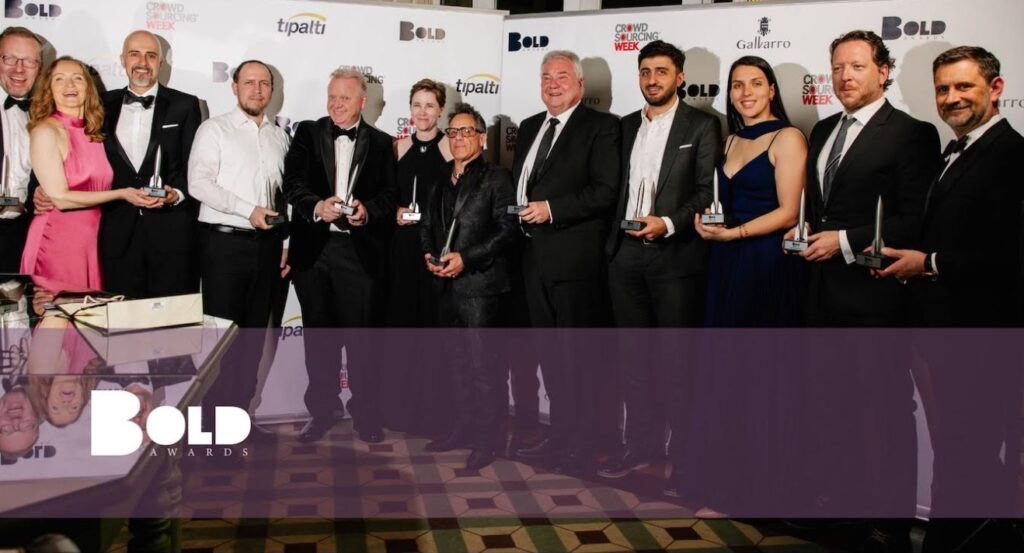
BOLD Awards VII is now open for entries. Boldest AI is one of the 22 categories. This award is open to any Artificial Intelligence (AI) standalone project or as part of a larger project. The success of the project should be demonstrated in terms of how the development of AI led to improved performance or its ability to solve real problems.
All submissions can be revisited and upgraded at any time up to the final deadline in December 2025. Judging will begin with a round of public voting in January 2026, and continue with assessments by an international panel of judges, leading to a glittering award ceremony for all finalists on 27th March 2026 in Barcelona, Spain.
There are also opportunities to gain prominence and prestige as a category sponsor. Send an email to hello@bold-awards.com for more information about this.